
A building or structural collapse can place construction workers in immediate danger from falling concrete, masonry, steel, floors, walls, scaffolds, and other debris. Collapse accidents can occur during demolition, excavation, renovation, structural alteration, new construction, or work on an existing building whose condition has been compromised.
An NYC building collapse accident lawyer can investigate the condition of the structure, work sequence, engineering and demolition plans, contractors, inspections, equipment, and safety measures involved. An injured employee may have workers’ compensation rights and, depending on the facts, may also need to evaluate claims under New York Labor Law or against third parties responsible for unsafe conditions.
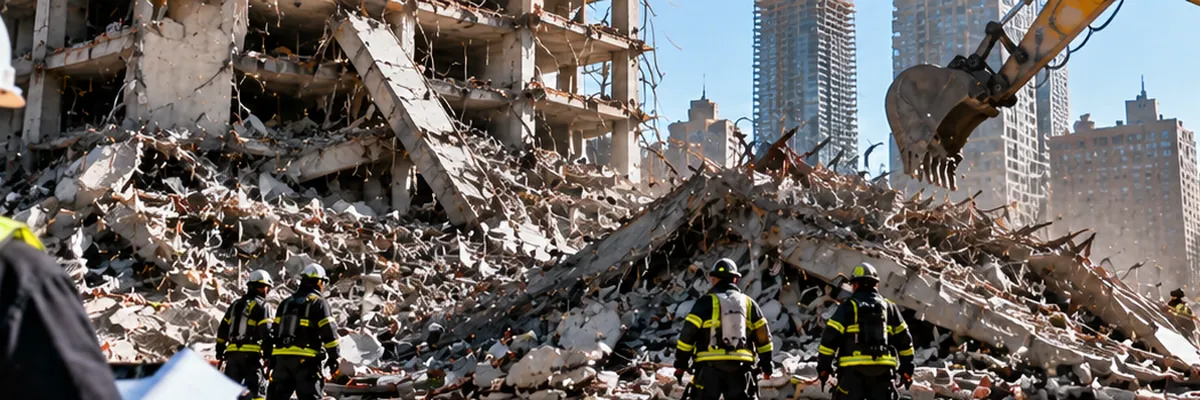
Structural failures can have many causes. Potential issues include removal of load-bearing members, inadequate shoring or bracing, unsafe demolition sequencing, overloaded floors, excavation affecting adjacent structures, temporary-support failures, deterioration, design or engineering problems, equipment loads, or work that changes the stability of a structure.
Determining the cause often requires technical analysis rather than assumptions based on the visible damage. Engineering records, site conditions, construction sequencing, photographs, witness accounts, inspection documents, and physical evidence can help reconstruct what occurred.
OSHA describes demolition as construction work with additional hazards created by unknown conditions. Its demolition standards require an engineering survey by a competent person before demolition begins to determine the condition of the framing, floors, and walls and the possibility of an unplanned collapse.
OSHA’s demolition rules also address removal of walls, masonry, floors, structural steel, and material with mechanical equipment. For example, walls generally must be left stable at the end of each shift, and mechanical equipment may not be used on a floor or working surface unless that surface can support the imposed load.
Not every collapse involves an entire building. A masonry wall, floor section, façade, ceiling, roof, trench-adjacent structure, temporary support, or portion of a building can fail and seriously injure workers.
Partial collapses may create secondary hazards because remaining structural elements can be unstable. Workers should not enter or approach a damaged structure merely to document evidence. Scene evaluation and evidence preservation should be coordinated with emergency personnel and qualified professionals.
New York Labor Law § 241 applies to construction, excavation, and demolition work and imposes safety requirements on covered owners, contractors, and their agents, subject to statutory exceptions. Section 241(6) can support claims based on applicable New York Industrial Code provisions when the legal requirements are met.
Labor Law § 240 may also be relevant in some collapse cases involving elevation-related risks and covered work. It requires specified safety devices to provide proper protection to workers engaged in activities such as erection, demolition, repairing, altering, painting, cleaning, or pointing of a building or structure. Whether either statute applies depends on the particular accident and work.
A construction project may involve a property owner, general contractor, construction manager, demolition contractor, excavation contractor, structural contractor, engineer, architect, equipment company, and numerous subcontractors. Their presence on a project does not automatically make each one legally responsible.
An investigation may examine contracts, delegated authority, ownership, site control, engineering responsibilities, inspection obligations, the work that affected structural stability, and the specific cause of the collapse. Product issues may also need review if defective equipment or temporary-support components contributed.
An employee injured in a job-related collapse may be eligible for New York workers’ compensation benefits. Those benefits can cover authorized medical treatment and provide partial wage replacement when a covered injury prevents the employee from working or reduces earnings.
Workers’ compensation is generally separate from a potential claim against a third party. Both issues may need to be evaluated when a collapse occurs on a multi-employer construction project.
Collapse accidents can cause traumatic brain injuries, spinal injuries, fractures, crush injuries, amputations, internal injuries, burns, respiratory injuries, lacerations, and fatalities. Workers can also be injured while escaping falling debris or after being trapped.
Some injuries require surgery, hospitalization, rehabilitation, or extended time away from construction work. Medical documentation can be important both for treatment and for establishing the effects of an injury on employment and daily life.
Collapse scenes can change rapidly during rescue, stabilization, debris removal, and reconstruction. Important physical evidence may be moved or destroyed as emergency work proceeds, making early preservation efforts particularly significant.
Potential evidence includes photographs and video, engineering surveys, structural drawings, demolition or excavation plans, permits, inspection records, contracts, daily reports, site-safety documents, equipment records, communications, surveillance footage, witness statements, and preserved structural components. Engineers or other technical experts may be needed to analyze causation.
Obtain emergency and follow-up medical treatment and report the accident through required workplace procedures. Preserve medical records, wage information, workers’ compensation paperwork, incident reports, photographs, and communications about the event.
If your condition permits, identify witnesses and preserve information about the work underway immediately before the collapse. Do not enter an unstable structure, cross emergency barriers, or disturb debris to gather evidence.
Consider obtaining legal advice before signing a release or giving a detailed recorded statement to an insurer or another party whose interests may differ from yours.
Structural collapses can be fatal. When a construction worker dies, eligible family members and the estate may have rights involving workers’ compensation death benefits and, depending on the circumstances, potential wrongful-death or other third-party claims.
A fatal collapse may involve government agencies, engineers, contractors, insurers, and multiple investigations. Preserving records and physical evidence can be especially important as the site is stabilized and cleared.
A lawyer can identify project participants, preserve evidence, obtain contracts and safety records, investigate engineering and work sequencing, review workers’ compensation issues, and evaluate Labor Law, negligence, or other claims supported by the facts.
Serious collapse injuries may create long-term medical expenses, wage loss, reduced earning capacity, rehabilitation needs, pain and suffering, disability, and other losses. Available benefits and damages depend on the legal claim, medical evidence, liability, insurance, and individual circumstances.
If you were injured in a building, wall, floor, roof, or other structural collapse on a New York City construction site, NYC Construction Accident Lawyers can review the circumstances and explain the legal options supported by the facts.
Contact the firm for a confidential consultation about workers’ compensation and any potential third-party construction accident claims.