
Demolition work can expose New York City construction workers to unstable structures, falling debris, heavy equipment, open floors, hazardous materials, electrical systems, and rapidly changing site conditions. When a worker is injured during the dismantling, razing, or removal of a building or structure, determining why the accident happened can require a detailed investigation of the demolition plan, work sequence, equipment, contractors, and safety measures.
An NYC demolition accident lawyer can evaluate workers’ compensation issues and investigate whether a property owner, general contractor, subcontractor, equipment company, or another party may have separate legal responsibility. The claims available depend on the worker’s role, the project, the hazard involved, and the facts surrounding the accident.
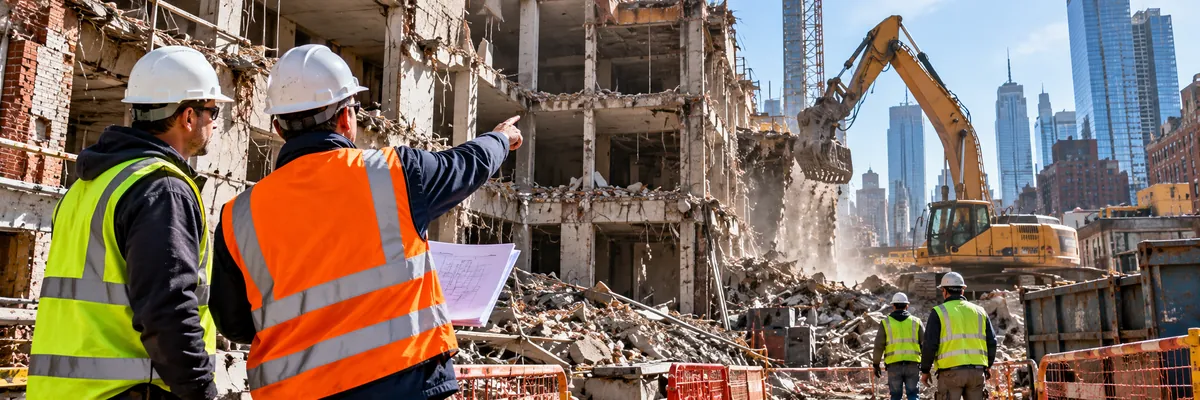
OSHA describes demolition as construction in reverse with additional hazards. Existing structures may contain undocumented modifications, weakened materials, hidden utilities, asbestos, lead, silica, or other hazards that are not obvious before work begins. Demolition methods can also change the stability of walls, floors, roofs, and structural supports.
OSHA’s demolition standards require planning before demolition begins. Under 29 CFR 1926.850(a), a competent person must perform an engineering survey to determine the condition of the framing, floors, and walls and the possibility of an unplanned collapse. Evidence that the survey was performed must be kept in writing.
Demolition injuries can arise from wall or floor collapses, falling masonry and debris, falls through floor openings, falls from elevated surfaces, struck-by incidents, excavators and other heavy equipment, crane operations, electrical hazards, fires, explosions, and exposure to hazardous substances.
OSHA has demolition-specific rules covering preparatory operations, stairs and ladders, chutes, floor openings, removal of walls and floors, storage, steel construction, mechanical demolition, and other activities. Which rule matters in a particular accident depends on the work being performed and the mechanism of injury.
Removing walls, floors, beams, or supports in the wrong sequence can affect structural stability. OSHA requires walls to be left in a stable condition at the end of each shift and imposes requirements for removal of masonry, load-supporting members, and work around floor openings.
After a collapse or falling-object accident, investigators may need photographs, video, engineering surveys, demolition plans, sequencing documents, daily reports, equipment records, and witness accounts. Because debris can be cleared quickly, preserving evidence early may be important.
Excavators, loaders, cranes, demolition attachments, trucks, and other machinery are often used to dismantle structures and move debris. Workers can be struck, crushed, caught between equipment and structures, or injured if a working surface cannot support machinery.
OSHA’s demolition rule for removing walls, floors, and material with equipment states that mechanical equipment should not be used on floors or working surfaces unless those surfaces are strong enough to support the imposed load. Equipment operations should be examined together with site access, exclusion zones, signaling, supervision, and the demolition sequence.
New York Labor Law § 241 specifically addresses construction, excavation, and demolition work. Among other requirements, § 241(6) provides that areas where such work is performed must be constructed, shored, equipped, guarded, arranged, operated, and conducted to provide reasonable and adequate protection and safety.
A claim under § 241(6) generally requires analysis of the applicable New York Industrial Code provisions and the facts of the accident. Other Labor Law provisions or negligence theories may also be relevant depending on whether the incident involved an elevation hazard, a dangerous site condition, the means and methods of the work, or another issue.
An employee injured while performing demolition work may be eligible for New York workers’ compensation benefits. The Workers’ Compensation Board states that covered benefits can pay for medical care and provide some wage replacement when a job-related injury prevents a worker from working or reduces earnings.
The Board instructs injured workers to notify their employer within 30 days and file Form C-3 as soon as possible. For an accidental injury, the general filing period is within two years of the accident. Exceptions and different rules can apply, so prompt action is important.
Potentially. Workers’ compensation is generally separate from a personal injury claim against a third party. On a demolition project, parties other than the direct employer can include property owners, general contractors, construction managers, demolition subcontractors, equipment companies, manufacturers, and other contractors.
Whether a third-party claim exists depends on legal responsibility for the hazard or work. Contracts, project records, supervision, control, ownership, equipment, and the specific accident circumstances can all matter.
Demolition sites can change faster than ordinary construction sites because the structure itself is being removed. Important evidence may disappear as debris is hauled away, walls are dismantled, equipment is moved, or unsafe conditions are corrected.
Evidence can include the pre-demolition engineering survey, demolition and site-safety plans, photographs and video, incident reports, permits, contracts, inspection records, equipment maintenance information, daily logs, toolbox talks, witness statements, and records concerning utilities or hazardous materials. Depending on the case, engineering, construction-safety, medical, or other experts may assist with technical questions.
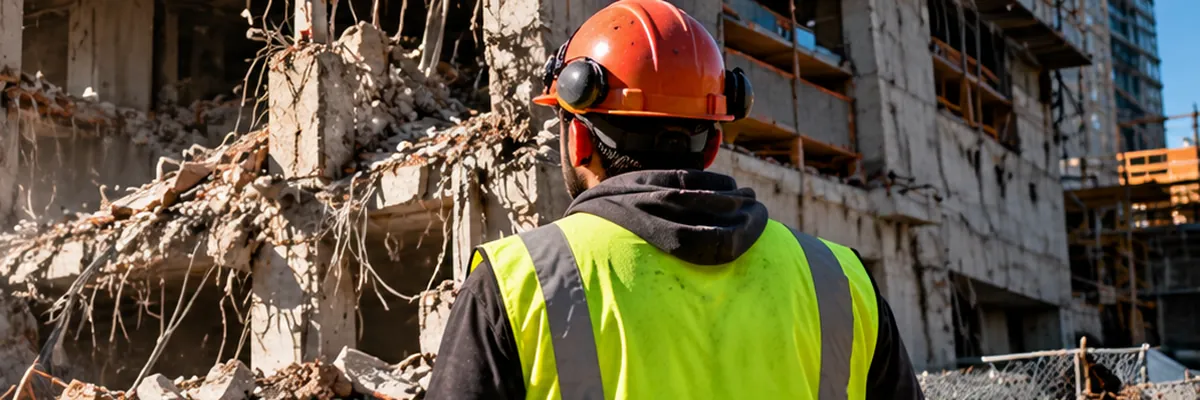
Seek appropriate medical treatment and report the accident through required workplace procedures. Preserve medical records, wage information, accident reports, workers’ compensation documents, and communications relating to the injury.
If your condition permits, identify witnesses and document the accident area from a safe location. Do not enter an unstable structure or approach hazardous machinery, electricity, fire, or contaminated debris to obtain evidence. Site documentation should never create another safety risk.
Consider obtaining legal advice before signing a release or providing a detailed recorded statement to an insurer or another party whose interests may differ from yours.
Depending on the claim, available benefits or damages may address medical care, lost wages, reduced earning capacity, rehabilitation, pain and suffering, disability, and other legally recognized losses. Workers’ compensation benefits and damages in a third-party action are governed by different rules.
The value and availability of any claim depend on the injuries, medical evidence, employment impact, responsible parties, insurance, and applicable law. No particular recovery can be predicted solely from the fact that a demolition accident occurred.
A lawyer can investigate the demolition project, identify the companies involved, preserve evidence, obtain contracts and safety records, review workers’ compensation issues, and evaluate potential Labor Law or negligence claims.
Demolition cases may require reconstructing the condition of a structure before it was altered or removed. Early investigation can help document the work sequence, engineering information, equipment, witnesses, and project responsibilities before those details become harder to establish.
If you were injured during demolition work in Manhattan, Brooklyn, Queens, the Bronx, or Staten Island, NYC Construction Accident Lawyers can review the accident and explain the legal options supported by the facts.
Contact the firm for a confidential consultation about a demolition injury, workers’ compensation benefits, and any potential third-party construction accident claims.