
Construction workers throughout New York City face hazards involving scaffolds, ladders, excavation, demolition, heavy equipment, falling objects, electrical systems, and other dangerous conditions. When an injury occurs on the job, New York workers’ compensation may provide medical care and wage-replacement benefits, while the facts may also support a separate claim against a responsible third party.
NYC Construction Accident Lawyers can review the workers’ compensation issues arising from a construction injury and investigate whether an owner, contractor, equipment company, manufacturer, or another party may have separate legal responsibility.

Construction accidents can cause fractures, traumatic brain injuries, spinal and back injuries, neck and shoulder injuries, amputations, crush injuries, burns, electrical injuries, knee and leg injuries, internal injuries, hearing damage, permanent disabilities, and fatal injuries.
Workers’ compensation generally does not require an injured employee to prove that the employer was negligent. Eligibility, benefits, medical issues, disability classifications, and disputes nevertheless depend on the facts and the Workers’ Compensation Law.
For a covered work-related injury or illness, workers’ compensation can pay for medical care and may provide wage-replacement benefits when an employee cannot work or earns less because of the injury. The amount and duration of benefits depend on the worker’s circumstances and applicable rules.
An injured worker should tell medical providers that the condition is work-related and follow the Workers’ Compensation Board’s requirements for treatment and claim documentation.
The New York Workers’ Compensation Board instructs injured workers to notify their employer as soon as possible and generally within 30 days of an injury. Written notice is recommended. Missing the notice period can jeopardize benefits, although the law contains circumstances in which late notice may be excused.
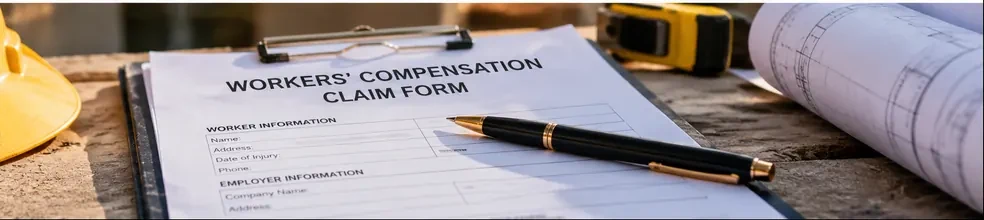
The Board also instructs workers to file an Employee Claim, Form C-3, as soon as possible. For an accidental injury, the general filing period is within two years of the accident. Occupational disease rules can differ. Because deadlines and exceptions can be fact-specific, prompt review is important.
Potentially. Workers’ compensation is generally a claim within the employment system, while a third-party personal injury claim is directed at another party that may be legally responsible for the accident.
Construction projects often involve property owners, general contractors, subcontractors, equipment companies, manufacturers, and other businesses. Depending on the facts and applicable law, a worker may receive workers’ compensation benefits while also pursuing a separate claim against a responsible third party.
Obtain appropriate medical treatment and report the accident to your employer promptly. Preserve written notice, accident reports, workers’ compensation documents, medical records, wage information, photographs, and correspondence.
If your condition permits, photograph the accident location, equipment, scaffold, ladder, construction materials, or other relevant conditions, and obtain witness contact information. Active construction sites can change quickly after an incident.
Consider obtaining legal advice before signing releases or making detailed statements about fault to parties whose interests may differ from yours.
Construction-worker classification can affect workers’ compensation rights, but the label a company uses is not necessarily controlling. The New York Workers’ Compensation Board explains that the Construction Industry Fair Play Act creates a presumption of employee status for certain workers performing services for a contractor, subject to the statute’s tests.
If a company claims that an injured construction worker is an independent contractor, the actual working relationship and statutory criteria should be reviewed rather than relying only on a contract label or tax form.
A lawyer can review the workers’ compensation claim, identify documentation and deadline issues, communicate about disputed matters, and investigate whether the accident also supports claims against third parties.
That investigation can include accident reports, construction contracts, photographs and video, witness statements, safety records, equipment information, and evidence concerning the roles of owners, contractors, subcontractors, and other project participants.
Covered employees who suffer job-related injuries may be eligible for workers’ compensation benefits. Eligibility and the benefits available depend on the employment relationship, injury, medical evidence, and other claim-specific facts.
In some circumstances. A separate claim may be available against a third party other than the direct employer when the facts and applicable law support liability. Construction projects can involve several companies, so identifying the relevant parties is an important part of the investigation.
That description does not necessarily resolve worker classification. New York’s Construction Industry Fair Play Act applies specific tests and, in covered circumstances, a presumption of employee status.
Prompt action can protect both workers’ compensation rights and accident evidence. The Workers’ Compensation Board generally calls for employer notice within 30 days and filing Form C-3 within two years after an accidental injury, subject to applicable rules and exceptions.
If you were injured on a New York City construction site, workers’ compensation may be one part of your legal options. A separate construction accident claim may also be available when another party is legally responsible.
NYC Construction Accident Lawyers can review accidents involving scaffolds, ladders, falling objects, equipment, excavation, electrical hazards, and other construction conditions and explain the options supported by the facts.