
New York Labor Law § 240 is an important worker-protection statute for certain elevation-related hazards in construction and related work. Often called the “Scaffold Law,” the statute addresses safety devices used to protect workers engaged in covered activities such as erection, demolition, repairing, altering, painting, cleaning, or pointing of a building or structure.
Labor Law 240 injury cases are highly fact-specific. A fall from a ladder or scaffold may raise § 240 issues, but the statute does not automatically apply to every workplace fall. Claims can also involve objects that fall because they were being hoisted or required securing for the work. An NYC Labor Law 240 injury lawyer can investigate the task, elevation risk, safety devices, parties, and accident mechanism.
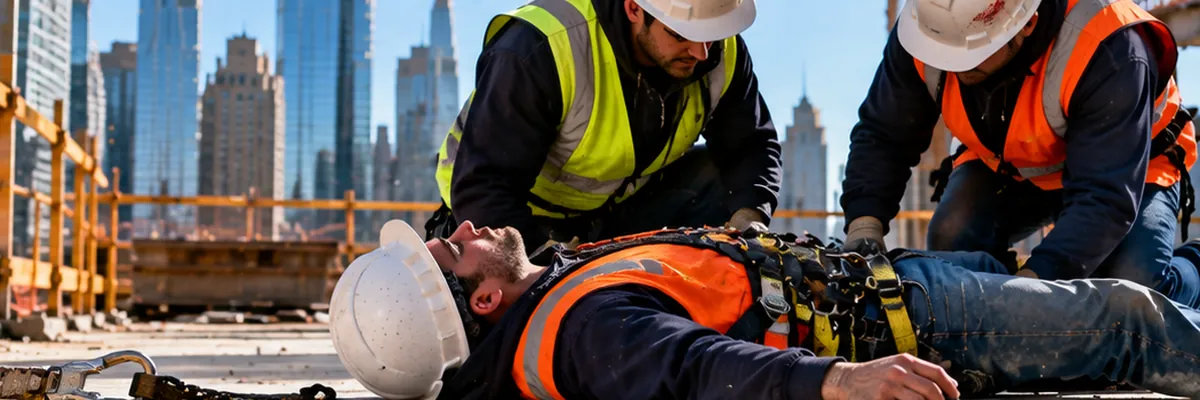
Section 240(1) directs covered contractors, owners, and their agents to furnish or erect safety devices—including scaffolding, hoists, stays, ladders, slings, hangers, blocks, pulleys, braces, irons, ropes, and other devices—so they are constructed, placed, and operated to give proper protection to workers performing covered labor.
The statute contains exceptions and limitations, including an exception for owners of one- and two-family dwellings who contract for but do not direct or control the work. Whether a defendant qualifies as an owner, contractor, or agent and whether the worker was performing a covered activity can be central issues.
Many § 240 cases arise from elevation-related falls involving ladders, scaffolds, roofs, temporary platforms, floor openings, structural steel, or other elevated work areas. Investigation may focus on whether an appropriate safety device was supplied, whether it was properly positioned and secured, and whether the device provided adequate protection for the work.
OSHA separately regulates fall protection in construction. Its construction standards address duties involving fall protection, system criteria, training, scaffolds, ladders, steel erection, and cranes. OSHA requirements and Labor Law § 240 are distinct legal frameworks, so an OSHA issue does not by itself determine a § 240 claim.
Labor Law 240 can also be relevant to some falling-object accidents involving elevation-related risks. These cases require more than showing that an object happened to fall. The circumstances surrounding the object, the work, the height differential, and whether securing or a safety device was required can matter.
Evidence may include rigging, hoists, slings, load information, photographs, video, project plans, witness accounts, and records showing how materials were stored, moved, or secured.
The statutory text covers workers employed in specified activities involving a building or structure, including erection, demolition, repairing, altering, painting, cleaning, and pointing. Whether a particular worker and task fall within § 240 requires analysis of the actual work rather than a job title alone.
Construction projects involve many trades and companies. A worker’s direct employer is not necessarily the only entity relevant to a § 240 investigation. Property ownership, contracting relationships, delegated authority, and the roles of project participants should be reviewed.
Section 240 expressly refers to contractors, owners, and their agents, subject to statutory exceptions. Identifying the proper parties can require review of deeds, construction contracts, subcontracts, site responsibilities, and authority over portions of the project.
Because legal status under the statute can be disputed, it is important not to assume that every company at the site is a proper § 240 defendant. The project structure and applicable law must be evaluated.
An injured employee may also have a New York workers’ compensation claim. The Workers’ Compensation Board states that covered benefits can pay for medical care and provide some wage replacement when a work-related injury prevents an employee from working or reduces earnings.
The Board instructs injured workers to notify their employer within 30 days and file Form C-3 as soon as possible; for accidental injuries, the general filing period is within two years. A potential Labor Law claim and workers’ compensation involve different legal rules and should be evaluated together when both may arise from the same accident.
Construction sites can change quickly after an accident. Ladders may be moved, scaffolds modified, openings covered, harnesses removed, or materials cleared. Prompt evidence preservation can help establish the conditions that existed when the injury occurred.
Relevant evidence may include photographs and video, the ladder or scaffold involved, harnesses and lanyards, hoisting or rigging equipment, incident reports, witness information, contracts, site-safety records, inspection documents, daily logs, and surveillance footage. Technical experts may assist with construction-safety or engineering issues when appropriate.
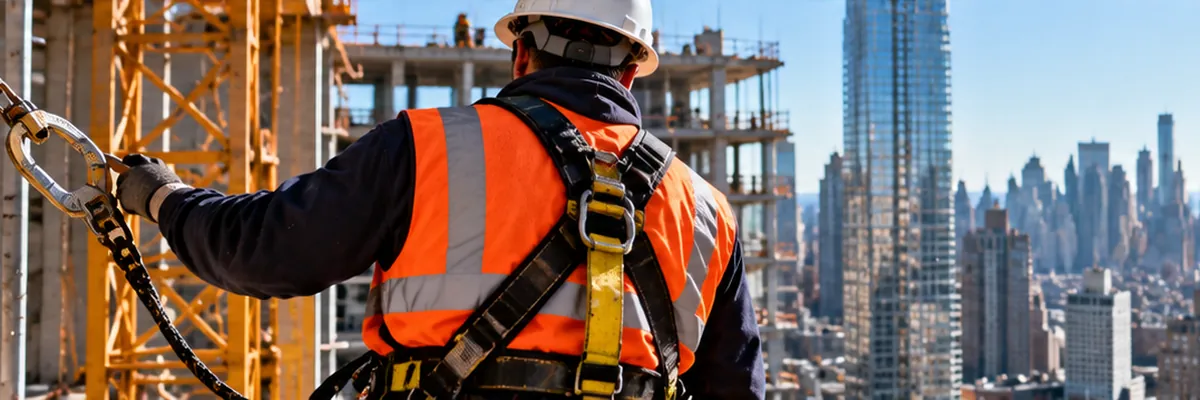
Seek appropriate medical care and report the accident through required workplace procedures. Preserve medical records, accident reports, workers’ compensation documents, wage information, photographs, and communications concerning the incident.
If your condition permits, identify witnesses and document the accident area from a safe location. Do not climb, re-enter an unsafe area, or handle damaged fall-protection equipment simply to collect evidence.
Consider obtaining legal advice before signing a release or giving a detailed recorded statement to an insurer or another party whose interests may differ from yours.
Falls and falling objects can cause traumatic brain injuries, spinal injuries, fractures, shoulder and knee injuries, crush injuries, internal trauma, and other serious conditions. Some workers require surgery, rehabilitation, or extended time away from construction work.
Depending on the claims available, benefits or damages may address medical care, wage loss, reduced earning capacity, pain and suffering, disability, and other legally recognized losses. The availability and amount of any recovery depend on the facts, medical evidence, responsible parties, and applicable law.
A lawyer can investigate the worker’s activity and accident mechanism, identify owners and contractors, preserve physical evidence, obtain contracts and project records, review the safety devices involved, and evaluate workers’ compensation and potential third-party claims.
Labor Law 240 litigation can turn on details about the task, elevation differential, safety device, project relationships, and cause of the accident. Early investigation can help preserve those details before the worksite changes.
If you were injured in a ladder fall, scaffold fall, roof accident, elevated-work incident, or qualifying falling-object accident on a New York City construction project, NYC Construction Accident Lawyers can review the circumstances and explain the legal options supported by the facts.
Contact the firm for a confidential consultation regarding New York Labor Law § 240, workers’ compensation, and any other potentially applicable construction-accident claims.